








Whether it’s post-inflammatory hyperpigmentation (PIH) or acne scars, many people find that their acne marks don’t fade as quickly or effectively as they would like. If you’ve been using topical treatments and still aren’t seeing the results you hoped for, you’re not alone. The truth is, certain types of acne marks may not respond well to topical products but can show significant improvement with medical procedures.
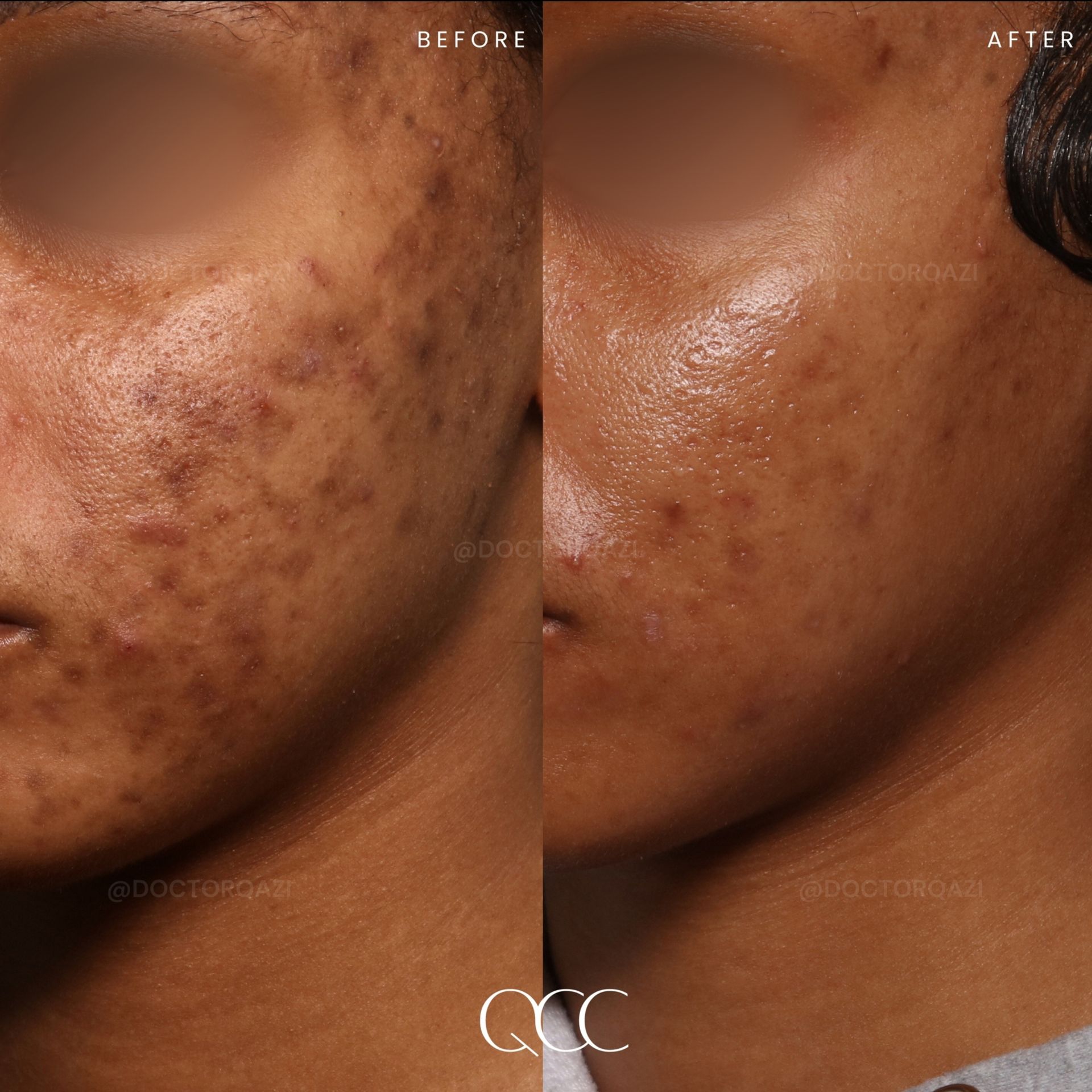
Why Acne Marks May Not Respond to Topical Treatments
Topical treatments are often the go-to solution for acne marks. These include products like creams, gels, and serums that typically contain ingredients like retinol, vitamin C, or hydroquinone. While these ingredients can be effective in treating discoloration, they don’t always work for everyone. Here’s why some acne marks don’t respond to topical treatments:
1. Depth of the Scar
Some acne scars are deeper than others. If the damage to the skin is extensive, topical treatments can only penetrate the surface layers of the skin, leaving deeper scars untouched. In these cases, medical procedures that target deeper layers, such as lasers or fillers, can provide better results.
2. Type of Acne Mark
Not all acne marks are the same. For instance, hyperpigmentation (PIH) caused by inflammation after a breakout typically responds to topical treatments over time. However, atrophic scars (those that form depressions in the skin) or hypertrophic scars (those that form raised tissue) may require medical intervention to achieve noticeable improvement.
3. Skin’s Natural Healing Ability
The speed at which skin heals varies from person to person. Some individuals may have a slower rate of skin regeneration, which means their acne marks take longer to fade, even with regular use of topical products. Medical treatments can accelerate the healing process by stimulating collagen production or encouraging cell turnover.
When to Consider Medical Procedures for Acne Marks
If you’ve been using topical treatments without success, it might be time to consider a more targeted approach with medical procedures. Here are some treatments that have proven to be highly effective for certain types of acne marks:
1. Laser Treatments
Laser treatments, such as CO2 or erbium lasers, can treat both discoloration and texture issues caused by acne scars. These lasers work by stimulating collagen production, which helps smooth out the skin’s surface and reduce the appearance of scars. Unlike topical treatments, laser therapy can reach deeper layers of the skin for more significant improvement.
2. Collagen Fillers
For atrophic scars, collagen fillers like Bellafill, Sculptra or Radiesse can provide immediate volume and smoothness to the affected area. Fillers like hyaluronic acid are injected beneath the skin to lift depressed scars, giving the skin a more even appearance. This approach is especially effective for deep scars that can’t be corrected with topical creams.
3. Chemical Peels
Chemical peels involve applying a solution to the skin that exfoliates the outer layers, revealing healthier skin beneath. This procedure can help reduce the appearance of superficial acne scars, and over time, it can improve the skin’s overall texture. Depending on the severity of your acne marks, stronger peels may be recommended.
4. Subcision
Subcision is a procedure where a needle is used to break up the fibrous tissue beneath the skin’s surface, which helps to improve the appearance of scars. It’s particularly effective for deep scars that cause skin depressions. Subcision can also be combined with other treatments like fillers for optimal results.
5. TCA Cross
TCA Cross is a procedure where a high-strength chemical solution is applied directly to acne scars to stimulate collagen production and skin regeneration. This targeted treatment effectively reduces scar depth and enhances skin texture over time.
Benefits of Medical Procedures Over Topical Treatments
While topical treatments can be effective for minor discoloration and lighter scarring, medical procedures offer a range of benefits for those dealing with more severe acne marks. Here are some advantages:
Faster Results: Medical procedures offer quicker and more noticeable results, especially for individuals with deep scars or skin texture issues.
Targeted Treatment: Unlike topical treatments that work on the skin’s surface, medical procedures can treat both the surface and deeper layers of the skin, improving both discoloration and texture.
Long-Term Results: Many medical procedures, such as laser treatments, provide long-lasting results compared to the temporary effects of topical treatments.
Contact Qazi Cosmetic Center Today
While topical treatments can be a great first step in treating acne marks, certain types of acne scars and marks require more intensive solutions. Medical procedures such as lasers, dermal fillers, and chemical peels can offer faster, more effective results, especially for deeper or more stubborn scars. If you’ve tried topical products without success, it may be time to explore the benefits of professional treatments. Contact us at (949)-336-7293 to schedule a consultation.

Meet Dr. Nadir Qazi
While growing up in Chicago, I struggled for years with severe acne and scarring. Dealing with constant comments about my skin, especially from friends and family, wasn’t easy. That feeling of isolation and defeat hit me hard. Many around me were in the same position, yet there were very limited solutions available. This led me to determine my mission: to tirelessly build a unique medical practice where compassion meets science, providing proper care for every overlooked skin type and tone. At my Center, my team and I offer only clinically proven treatments that I have personally researched. My goal is to help others achieve their dreams, breaking free from the constraints of their physical appearance, and to be the support I needed the most.



