








Dealing with the aftermath of acne can be challenging. While the pimples may be long gone, they often leave behind reminders in the form of acne marks and acne scars. Understanding the differences between these two skin concerns is crucial in choosing the right treatment. In this guide, we will delve into what sets acne marks and acne scars apart, and explore effective treatments to address each issue. At Qazi Cosmetic Center in Orange County, our mission is to provide you with the knowledge and solutions needed to regain your confidence and achieve clear, radiant skin.
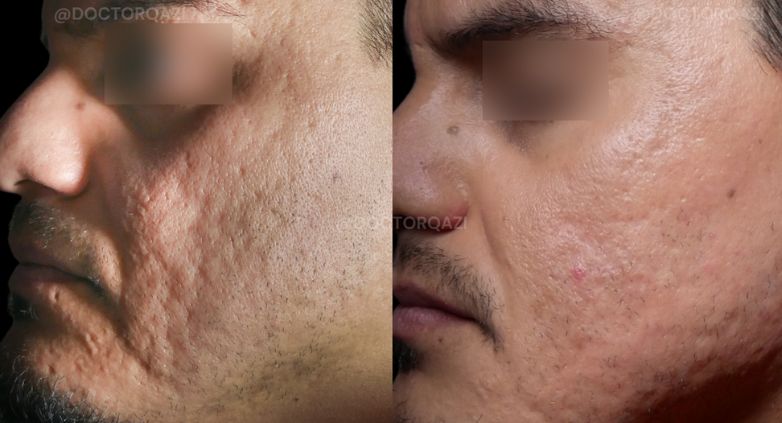
Differentiating Acne Marks from Acne Scars
Acne Marks
Acne marks, often referred to as post-inflammatory hyperpigmentation, are temporary discolorations or spots left behind after an acne blemish has healed. These marks can appear as pink, red, or dark brown areas on the skin. Unlike scars, acne marks are not a result of tissue damage but rather an overproduction of melanin in response to inflammation. They tend to fade naturally over time but can take several weeks or even months to completely disappear.
Acne Scars
On the other hand, acne scars are a bit more complex. These are permanent changes to the skin’s texture and are the result of damage to the collagen in the dermal layer. Acne scars can take several forms, including:
- Ice Pick Scars: Small, deep holes in the skin.
- Boxcar Scars: Wider depressions with sharp edges.
- Rolling Scars: Broad, shallow indentations.
- Hypertrophic Scars: Raised and thickened areas of skin.
Unlike marks, acne scars do not typically fade naturally. They may improve slightly over time but usually require targeted treatments for more significant improvement.
Effective Treatments for Acne Marks
Treating acne marks often focuses on promoting skin rejuvenation and reducing hyperpigmentation. Effective treatment options include:
- Topical Retinoids: These vitamin A derivatives can help fade marks by promoting skin cell turnover.
- Chemical Peels: Chemical peels containing glycolic acid or salicylic acid can exfoliate the top layers of skin, revealing fresh, unblemished skin.
- Microdermabrasion: This non-invasive procedure gently removes the top layer of skin, stimulating collagen production and fading marks.
- Intense Pulsed Light (IPL) Therapy: IPL can target the excess melanin in marks, reducing their appearance.
Effective Treatments for Acne Scars
Addressing acne scars is a more intricate process and often necessitates professional intervention. Effective treatments for acne scars include:
- Laser Therapy: Various laser treatments, including Fractional Laser and Accure Laser, can resurface the skin and stimulate collagen production, reducing the appearance of scars.
- Dermal Fillers: Fillers such as hyaluronic acid can be used to fill in depressed scars, making them less noticeable.
- Microneedling: This procedure involves tiny needles that create controlled injuries in the skin, stimulating collagen growth and improving scar texture.
- Chemical Peels: Deeper chemical peels can be used to target more severe scars, improving their appearance over time.
- Subcision: Subcision is a minimally invasive procedure that involves breaking up the fibrous bands beneath scar tissue. This technique lifts depressed scars, allowing the skin to naturally regenerate and fill in the scar area.
- TCA Cross: TCA Cross, or Trichloroacetic Acid Chemical Reconstruction of Skin Scars, is a precise chemical peel technique. It involves applying TCA directly to the acne scar, stimulating collagen production and encouraging the scar to fill in.
Contact Qazi Cosmetic Center Today
Distinguishing between acne marks and acne scars is essential for choosing the right treatment. While marks often fade naturally and can be addressed with topical treatments, scars require more advanced interventions. At Qazi Cosmetic Center in Orange County, our team of experts is dedicated to helping you achieve the clear and radiant skin you desire. To discuss your unique needs and explore the most suitable treatment options, call us at (949)-336-7293.

Meet Dr. Nadir Qazi
While growing up in Chicago, I struggled for years with severe acne and scarring. Dealing with constant comments about my skin, especially from friends and family, wasn’t easy. That feeling of isolation and defeat hit me hard. Many around me were in the same position, yet there were very limited solutions available. This led me to determine my mission: to tirelessly build a unique medical practice where compassion meets science, providing proper care for every overlooked skin type and tone. At my Center, my team and I offer only clinically proven treatments that I have personally researched. My goal is to help others achieve their dreams, breaking free from the constraints of their physical appearance, and to be the support I needed the most.



