








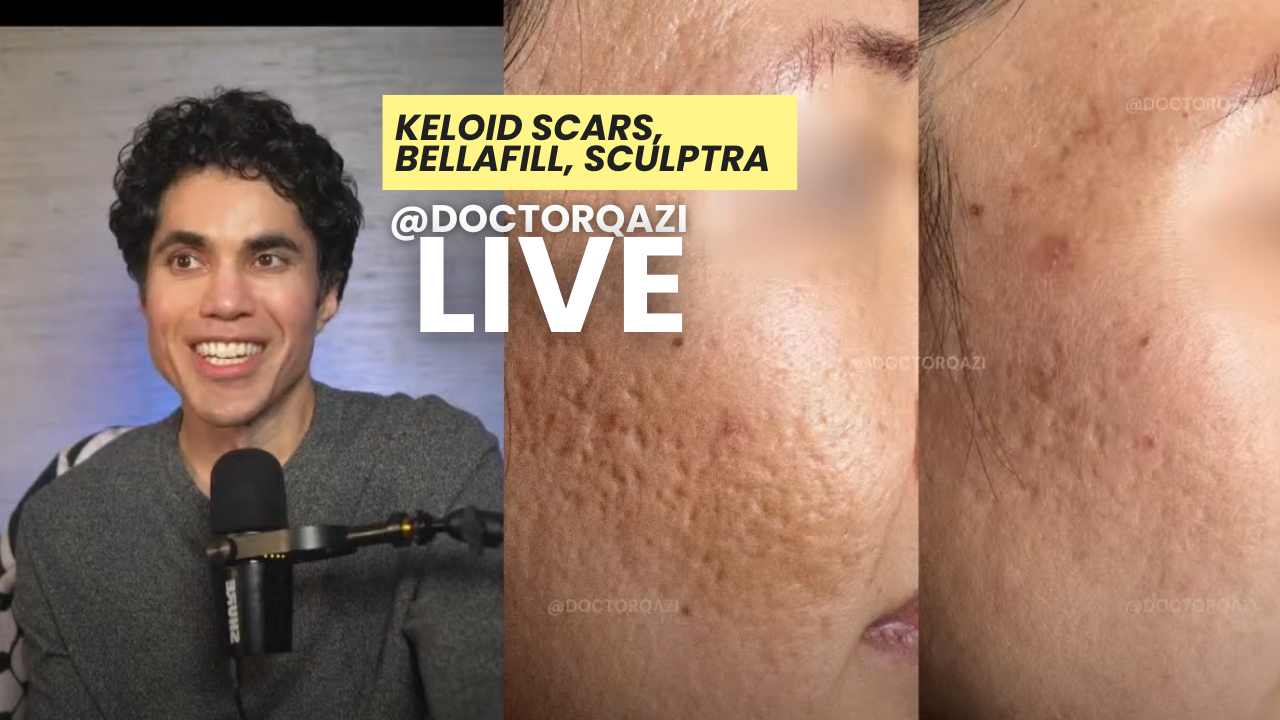
Hi everyone, I’m Dr. Qazi, a skin restoration specialist based in Newport Beach, California. Today, I want to share my experience treating acne scars with you, focusing on a patient journey that spans over a year. This particular case involves a patient of Korean origin who has been dealing with boxcar and rolling scars.
The Patient’s Journey
When this patient first came to me, she had significant hyperpigmentation along with her scars. Over the past year, we’ve made substantial progress. We’re not done yet—there’s still room for improvement—but the results so far are promising.
I always aim to set realistic expectations. For this patient, we’ve used a combination of treatments including TCA cross, Bellafill, ablative CO2 laser, and erbium laser. Each session builds upon the last, and patience is key. It’s not about immediate results; it’s about gradual improvement over time.
Treatment Approaches
Subcision and TCA Cross
One of the initial steps was subcision, where I manually break up scar tissue to lift the scars. Following this, I apply TCA cross using a paintbrush technique. This method allows precise application within each scar.
Lasers and Fillers
To soften the edges of the scars, I use both ablative CO2 and erbium lasers. Additionally, I place Bellafill strategically, particularly in areas like the temples and cheeks, to address volume loss. Volume loss is common, especially in patients in their late 30s, due to natural aging processes.
Managing Hyperpigmentation
Hyperpigmentation is a concern for many patients, but with careful treatment, we can manage it effectively. In this case, despite the patient’s tendency towards hyperpigmentation, we successfully cleared it without causing new pigmentation issues. Proper technique and gradual progression are crucial.
Cost Considerations
The cost varies depending on the extent of the treatment needed. Most patients spend between $5,000 to $7,000. However, for those requiring more extensive work, such as additional Bellafill for volume loss, costs can reach up to $10,000. Unfortunately, insurance typically doesn’t cover scar treatments.
Addressing Common Questions
Many people ask whether Accutane helps with acne scars. While it might slightly improve superficial scars by stimulating collagen production and shrinking pores, it won’t significantly impact deeper scars. For deep ice pick or boxcar scars, other treatments like TCA cross and subcision are more effective.
Silicone tape plays a vital role in preventing keloid formation post-procedure. It reduces friction and helps maintain smoothness in treated areas. Patients prone to keloids find this approach beneficial.
For post-inflammatory hyperpigmentation, over-the-counter products containing azelaic acid or Eucerin Anti-Pigment Cream can be helpful. If these aren’t sufficient, professional treatments like Pico laser and chemical peels offer advanced solutions.
Long-Term Results
Seeing long-term results is incredibly rewarding. Some of my proudest moments come from seeing patients years after their initial treatment, knowing that the improvements have stood the test of time. Collagen production continues to enhance results even two years later.
Final Thoughts
Treating acne scars is a meticulous process that requires precision and patience. Slow and steady wins the race. Rushing treatments can lead to complications, which is why I advocate for a gradual approach tailored to each patient’s unique needs.
If you’re considering scar treatment, remember that consultation is the first step. Consultations at my clinic are $150, and you can schedule one directly through our website, doctorqazi.com . Availability fills quickly, but joining the cancellation list can help secure an earlier appointment.
Thank you for joining me today. Stay tuned for more insights into skin restoration and feel free to reach out with any questions!

Meet Dr. Nadir Qazi
While growing up in Chicago, I struggled for years with severe acne and scarring. Dealing with constant comments about my skin, especially from friends and family, wasn’t easy. That feeling of isolation and defeat hit me hard. Many around me were in the same position, yet there were very limited solutions available. This led me to determine my mission: to tirelessly build a unique medical practice where compassion meets science, providing proper care for every overlooked skin type and tone. At my Center, my team and I offer only clinically proven treatments that I have personally researched. My goal is to help others achieve their dreams, breaking free from the constraints of their physical appearance, and to be the support I needed the most.



