








I’m sitting here tonight, reflecting on some of the questions I’ve been asked during consultations and live sessions. One thing that keeps coming up is how often patients are sold unnecessary packages for acne scar treatments that’s why I will talk about the realities of acne scar treatments. Just yesterday, a patient named Patty told me she was sold five sessions of pixel RF microneedling for a single ice pick scar. Five sessions. For one tiny scar. When she shared this, I couldn’t help but feel frustrated—not at her, but at the industry.
It’s not uncommon for clinics to push big packages, whether it’s radiofrequency microneedling, fractional lasers, or even Morpheus 8. But here’s the truth: these treatments aren’t always the right solution for every type of scar. Ice pick scars, for instance, rarely respond well to devices like pixel RF or Morpheus 8. Instead, simpler and more targeted approaches—like TCA cross or excisions—are often far more effective. Yet, patients are frequently misled into thinking they need multiple expensive sessions to see results.
When someone comes to me after being sold an ineffective package, I can’t help but wonder: why weren’t they given honest advice? Why wasn’t their specific case evaluated thoroughly before recommending such aggressive (and costly) plans? It’s something I see way too often, and it’s time we start calling it out.
The Problem with Rolling Devices and Aggressive Techniques
Another issue I want to address is the use of rolling devices, whether it’s for microneedling or certain laser treatments. A patient recently came to me after undergoing a Halo laser treatment. She described how the practitioner used a rolling motion, applying excessive pressure across her skin. The result? New scars where there were none before.
This isn’t the first time I’ve seen complications from poorly executed rolling techniques. Whether it’s a dermaroller, a Halo laser, or any other device that involves friction or repetitive motion, the risk of damaging the skin increases significantly if the practitioner isn’t careful. And unfortunately, many aren’t.
What frustrates me most is that these devices are often marketed as “miracle solutions” for scars. But let’s be clear: no single device can solve every type of scar. Ice pick scars, boxcar scars, rolling scars—they each require a tailored approach. For example, while a fractional CO2 laser might soften thick edges of a scar, it won’t do much for deep ice pick scars without combining it with other modalities like TCA cross or subcision.
Silicone Injections: A Dangerous Trend
One trend that really concerns me is the use of non-FDA-approved silicone injections for facial scars. I had a patient come in recently who’d undergone silicone injections to fill in his acne scars. At first, he thought the results looked promising. But within a year, lumps started forming under his skin. These lumps weren’t just unsightly—they caused him significant emotional distress.
The FDA has explicitly warned against silicone injections for both the face and body, yet some practitioners continue to offer them. Why? Because they’re cheap and easy to administer. But the risks far outweigh any temporary benefits. Once those lumps form, removing them becomes incredibly difficult—and sometimes impossible.
If you’re considering silicone injections for scars, please think twice. There are safer, FDA-approved alternatives like Bellafill that can provide long-lasting results without the same level of risk. Always prioritize safety over shortcuts.
The Importance of Volume Replacement in Scar Treatment
Something else I want to highlight is the role of volume replacement in treating acne scars. Many patients focus solely on surface texture, assuming that smoothing out the skin will solve everything. But what about the underlying tissue loss?
When severe acne destroys fatty tissue beneath the skin, simply addressing the surface won’t fully restore the area. That’s why treatments like fat transfer, Bellafill, Sculptra, or Radiesse are so important. They replace lost volume, creating a more natural and balanced appearance.
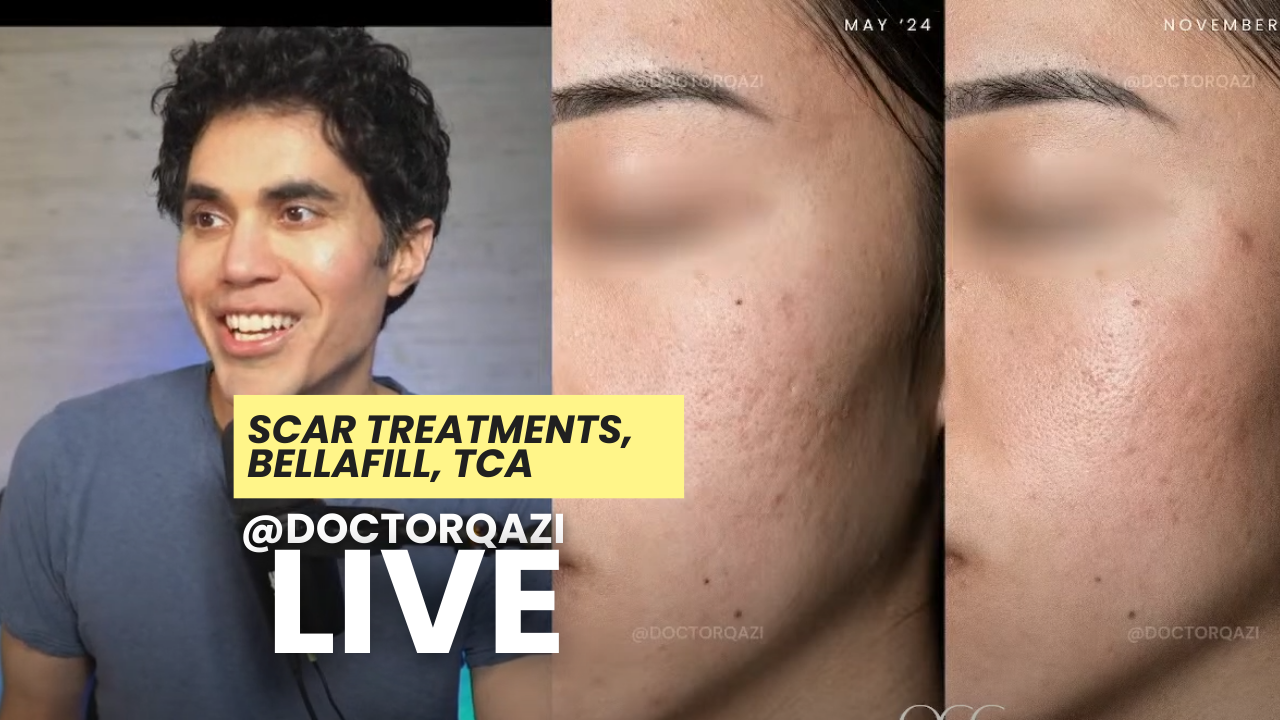
Take one of my recent patients, for example. She’d undergone several rounds of fractional CO2 laser and microneedling, but her scars remained visible. After assessing her case, I realized the missing piece was volume. By incorporating Bellafill into her treatment plan, we finally achieved the improvement she’d been hoping for.
Ethical Concerns in the Aesthetic Industry
As a physician, I take ethics seriously. Unfortunately, not everyone in this field shares the same values. I hear stories almost daily about practitioners pushing unnecessary treatments, overselling packages, or using unproven methods on unsuspecting patients.
For instance, I’ve seen cases where patients were told they needed subcision and fat transfer done simultaneously. This makes no sense anatomically. Subcision breaks up tethered scar tissue, while fat transfer adds volume—but doing both at once creates chaos. The fat ends up misplaced, leading to uneven results or even lumps.
Then there are the sales tactics. Some clinics bring in “consultants” whose sole job is to upsell patients on additional procedures. Botox for acne scars? Under-eye fillers for texture issues? These combinations don’t add up, yet they’re sold as “essential.”
To anyone reading this: if something feels off during a consultation, trust your instincts. Ask questions. Seek second opinions. And remember, ethical practitioners will always prioritize your best interests over profit.
Addressing Common Misconceptions About Acne Scar Treatments
There’s a lot of misinformation out there about acne scar treatments, and it’s time we clear the air. Let’s talk about PRP (platelet-rich plasma) and PRF (platelet-rich fibrin), for example. While these treatments can improve skin quality by boosting collagen production, they’re not magic bullets for deep scars. If you have significant volume loss or tethered scar tissue, PRP alone won’t cut it.
Similarly, phenol peels are often touted as a cure-all for scars. While they can be effective for thick, raised scars, they’re not suitable for every patient. In fact, for many cases, gentler treatments like TCA cross or erbium lasers yield better results with minimal downtime.
And let’s not forget about Clear + Brilliant. Despite its popularity, I’ve yet to see a patient achieve meaningful scar improvement from this device. Most report minimal changes, even after multiple sessions.
Empowering Patients Through Transparency
At the end of the day, my goal is to empower patients with knowledge. You deserve to know what works, what doesn’t, and why. Whether it’s understanding the limitations of certain treatments or recognizing unethical practices, education is key.
That’s why I encourage open dialogue during consultations. Ask me anything—how a procedure works, what to expect during recovery, potential risks, or even why I recommend one treatment over another. The more informed you are, the better equipped you’ll be to make decisions about your care.
For those interested in scheduling a consultation, you can visit doctorqazi.com . My team will guide you through the process, ensuring you’re prepared with photos and instructions to make the most of our time together.

Meet Dr. Nadir Qazi
While growing up in Chicago, I struggled for years with severe acne and scarring. Dealing with constant comments about my skin, especially from friends and family, wasn’t easy. That feeling of isolation and defeat hit me hard. Many around me were in the same position, yet there were very limited solutions available. This led me to determine my mission: to tirelessly build a unique medical practice where compassion meets science, providing proper care for every overlooked skin type and tone. At my Center, my team and I offer only clinically proven treatments that I have personally researched. My goal is to help others achieve their dreams, breaking free from the constraints of their physical appearance, and to be the support I needed the most.



