








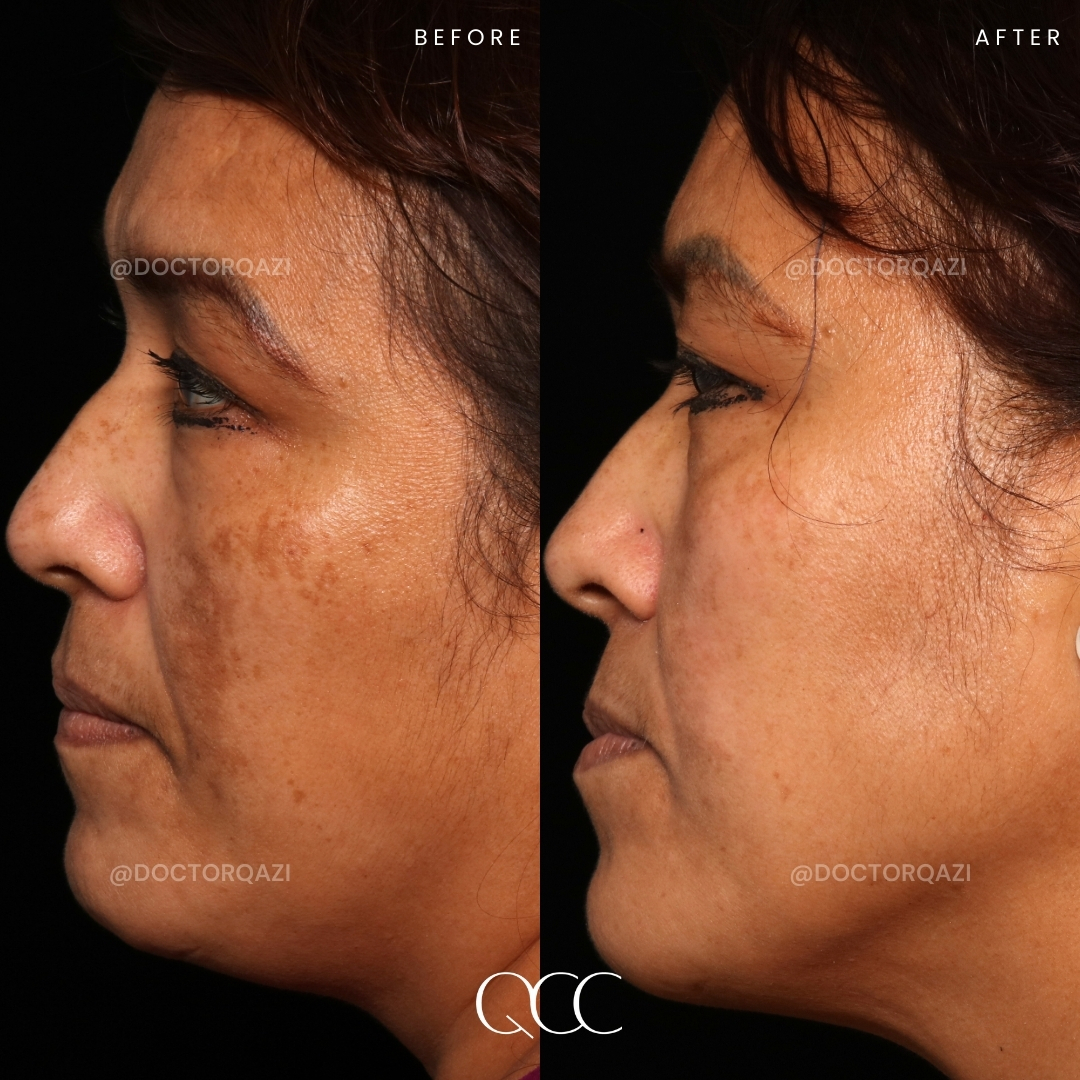
Melasma is a common concern, especially for individuals with a genetic predisposition. While genetics can’t be changed, adopting certain early-life habits may help minimize the risk of developing melasma later in life. At Qazi Cosmetic Center in Orange County, we specialize in preventing and treating melasma, and in this article, we’ll share actionable tips to help you manage your risk.

Why Prevention Matters for Melasma
Melasma can be persistent and challenging to manage once it appears, often requiring ongoing treatments. Early prevention strategies are especially crucial if you have a family history of melasma or other hyperpigmentation concerns. By focusing on daily habits, you can take proactive steps to protect your skin and possibly delay or reduce the intensity of melasma.
Key Habits to Reduce Your Risk of Melasma
1. Sun Protection Is Non-Negotiable
Excess sun exposure is one of the leading triggers of melasma. Starting sun-protective habits early in life can significantly reduce your risk.
- Use a Broad-Spectrum Sunscreen: Opt for SPF 50+ and reapply every two hours.
- Seek Shade: Avoid peak sun hours (10 a.m. to 4 p.m.).
- Wear Protective Gear: Wide-brimmed hats and UV-blocking sunglasses provide extra protection.
2. Establish a Consistent Skincare Routine
Developing good skincare habits early can help your skin stay healthy and balanced.
- Gentle Cleansing: Use a mild cleanser to avoid irritation.
- Daily Moisturizing: Hydrated skin is less likely to overproduce melanin.
- Avoid Over-Exfoliating: Over-exfoliation can weaken your skin barrier, increasing your risk of pigmentation issues.
3. Avoid Hormonal Triggers When Possible
Hormonal changes, such as those caused by pregnancy or birth control, are common melasma triggers. If you have a family history of melasma:
- Consult your doctor about low-hormone contraceptive options.
- Monitor your skin during hormonal changes and adapt your routine as needed
Early Lifestyle Adjustments That Help
4. Adopt a Skin-Healthy Diet
What you eat plays a role in your skin’s overall health. A diet rich in antioxidants can help combat free radicals, which may worsen pigmentation.
- Focus on Antioxidants: Include berries, leafy greens, and nuts.
- Stay Hydrated: Drinking enough water supports skin elasticity.
- Limit Sugar and Processed Foods: These can increase inflammation, which may trigger melasma.
5. Manage Stress Levels
Chronic stress can lead to hormonal imbalances, potentially contributing to melasma. Incorporating stress-relief techniques into your daily routine can make a big difference.
- Try meditation or yoga.
- Get regular physical activity.
- Prioritize quality sleep every night.
FAQs About Melasma Prevention
Can Sunscreen Alone Prevent Melasma?
While sunscreen is essential, it works best as part of a comprehensive routine that includes other protective measures like wearing hats and maintaining healthy skin habits.
Does Melasma Always Appear If It’s Genetic?
Not necessarily. Genetics increase your susceptibility, but early prevention measures can reduce your risk or delay the onset.
Choose Qazi Cosmetic Center
Preventing melasma in individuals with a genetic predisposition is challenging but not impossible. By starting early with sun protection, a consistent skincare routine, a skin-healthy diet, and stress management, you can significantly reduce your risk or delay the onset of melasma. While these habits won’t eliminate the possibility entirely, they are powerful tools for keeping your skin healthier and more resilient. Call us at (949)-336-7293 for a consultation and more information.

Meet Dr. Nadir Qazi
While growing up in Chicago, I struggled for years with severe acne and scarring. Dealing with constant comments about my skin, especially from friends and family, wasn’t easy. That feeling of isolation and defeat hit me hard. Many around me were in the same position, yet there were very limited solutions available. This led me to determine my mission: to tirelessly build a unique medical practice where compassion meets science, providing proper care for every overlooked skin type and tone. At my Center, my team and I offer only clinically proven treatments that I have personally researched. My goal is to help others achieve their dreams, breaking free from the constraints of their physical appearance, and to be the support I needed the most.



