








Melasma, a common skin condition characterized by brown or gray patches on the face, can be a persistent concern. In the search for clearer, more even-toned skin, individuals often explore various treatment options. One popular option is Hydrocortisone for melasma. At Qazi Cosmetic Center in Orange County, we will tell the truth about Hydrocortisone’s effectiveness for melasma. We’ll explore the definition of melasma, evaluate the efficacy of Hydrocortisone, and introduce alternative treatments such as PicoSure laser and chemical peels.
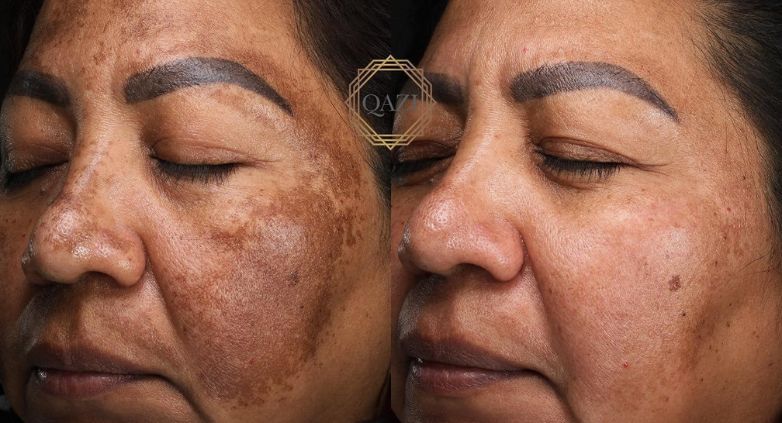
Understanding Melasma
Melasma is a dermatological condition that results in the development of dark, pigmented patches on the skin, commonly on the face. This hyperpigmentation is often linked to sun exposure, hormonal changes (like pregnancy or birth control use), and genetics.
Does Hydrocortisone Work for Melasma?
Hydrocortisone is a topical corticosteroid that is sometimes considered for treating skin conditions like inflammation and itching. While it may provide temporary relief for some skin issues, its effectiveness for melasma is a subject of debate. Here’s what you should know:
- Temporary Improvement: Hydrocortisone may offer temporary improvement in the appearance of melasma by reducing inflammation and redness. However, it does not address the root cause of the condition.
- Not a Long-Term Solution: Hydrocortisone is not a long-term solution for melasma. Prolonged use can lead to side effects such as skin thinning, sensitivity, and even worsening of pigmentation.
- Risk of Rebound Hyperpigmentation: Discontinuing the use of Hydrocortisone can sometimes result in a phenomenon called rebound hyperpigmentation, where the melasma worsens.
Given these factors, it’s crucial to consult with a dermatologist or skincare professional before using Hydrocortisone for melasma. They can provide guidance on its safe and appropriate use and explore other treatments that may offer better and more lasting results.
Alternative Melasma Treatments
If Hydrocortisone isn’t the ideal solution for melasma, there are alternative treatments available that can address the condition more effectively. Some of the noteworthy options include:
- PicoSure Laser: PicoSure is a laser treatment that uses ultra-short pulses to target and break down melanin in melasma patches, providing more consistent and lasting results.
- Chemical Peels: Chemical peels involve applying a chemical solution to the skin to exfoliate the top layers and reduce pigmentation.
- Topical Agents: Dermatologists may prescribe topical treatments that contain ingredients like hydroquinone, retinoids, or glycolic acid, which can help fade melasma over time.
- Sun Protection: Sunscreen is crucial for managing and preventing melasma. UV radiation can trigger and worsen melasma, so diligent sun protection is key.
Contact Qazi Cosmetic Center
While Hydrocortisone may provide temporary relief for melasma by reducing inflammation and redness, it is not a recommended long-term solution. Prolonged use can lead to unwanted side effects and may even worsen the condition. If you’re dealing with melasma, it’s essential to consult with a dermatologist who can provide expert guidance and explore alternative treatments such as PicoSure laser, chemical peels, and topical agents for a more effective and lasting solution.
For personalized advice on melasma treatments and to explore the most effective options for your unique skin, contact us at (949)-336-7293. Qazi Cosmetic Center is committed to helping you achieve clear, even-toned skin and providing you with the best solutions for your skincare needs.

Meet Dr. Nadir Qazi
While growing up in Chicago, I struggled for years with severe acne and scarring. Dealing with constant comments about my skin, especially from friends and family, wasn’t easy. That feeling of isolation and defeat hit me hard. Many around me were in the same position, yet there were very limited solutions available. This led me to determine my mission: to tirelessly build a unique medical practice where compassion meets science, providing proper care for every overlooked skin type and tone. At my Center, my team and I offer only clinically proven treatments that I have personally researched. My goal is to help others achieve their dreams, breaking free from the constraints of their physical appearance, and to be the support I needed the most.



