








Melasma is a common skin condition that can cause brown or gray patches to appear on the face, primarily on the cheeks, forehead, and upper lip. If you’re dealing with melasma, understanding its type is crucial for effective treatment. In this article, we’ll explore the differences between dermal and epidermal melasma, how to identify your specific type, and the solutions available at Qazi Cosmetic Center in Orange County to address this challenging skin concern.
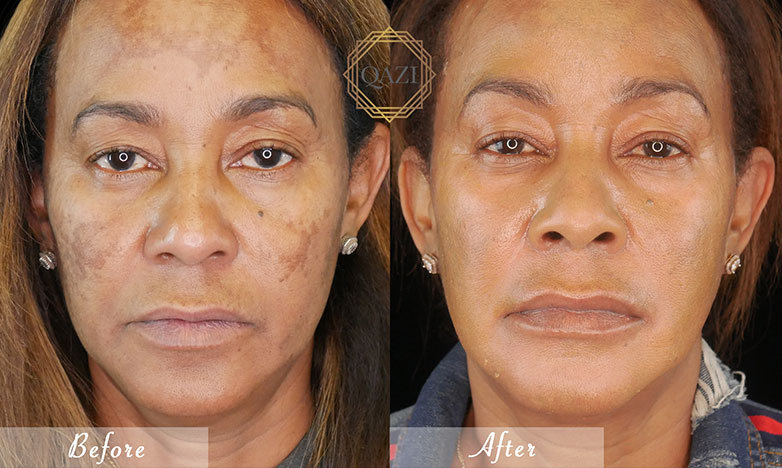
Defining Dermal and Epidermal Melasma
Melasma is typically classified into two main types: dermal and epidermal.
- Epidermal Melasma: This type of melasma primarily affects the top layer of the skin, known as the epidermis. Epidermal melasma is characterized by brown patches that are well-defined and easily seen on the surface of the skin.
- Dermal Melasma: Dermal melasma, on the other hand, penetrates deeper into the skin, affecting the dermal layer. Dermal melasma is characterized by brown or gray patches that are less defined and often appear as a shadow beneath the skin’s surface.
How to Determine Your Melasma Type
Identifying the type of melasma you have is essential for creating a targeted treatment plan. Here are some methods to help you determine if your melasma is dermal or epidermal:
- Consult a Dermatologist: The most reliable way to determine your melasma type is by consulting a dermatologist. They can examine your skin, possibly using a Wood’s lamp or other specialized equipment, to distinguish between dermal and epidermal melasma.
- Observe Your Melasma: Examine your melasma closely in a well-lit area. If the patches are well-defined and appear on the surface of your skin, they are more likely to be epidermal. If they seem to have a shadowy, blurred quality and are below the skin’s surface, they may be dermal.
- Consider Contributing Factors: Some factors may increase the likelihood of one melasma type over the other. For example, hormonal changes, such as pregnancy or birth control use, are often associated with epidermal melasma. Dermal melasma may be more common in individuals with a family history of the condition.
Treatment Options for Dermal and Epidermal Melasma in Orange County
The type of melasma you have can influence the treatment approach. Here are some treatment options available at Qazi Cosmetic Center in Orange County for both epidermal and dermal melasma:
For Epidermal Melasma:
- Topical Treatments: Dermatologists often recommend topical treatments containing ingredients like hydroquinone, retinoids, or glycolic acid to lighten epidermal melasma.
- Chemical Peels: Chemical peels can exfoliate the top layer of the skin, reducing the appearance of epidermal melasma.
- Laser Therapy: Various laser treatments can target the melanin in epidermal melasma, leading to clearer skin.
For Dermal Melasma:
- Combination Therapies: Dermal melasma is more challenging to treat. Dermatologists may recommend a combination of treatments, such as laser therapy, chemical peels, and topical agents to target the deeper pigmentation.
- Fractional Laser Resurfacing: Fractional laser treatments can stimulate collagen production and gradually improve the appearance of dermal melasma.
- Cosmetic Camouflage: Makeup and cosmetic camouflage can be effective in concealing dermal melasma for a more even skin tone.
Contact Qazi Cosmetic Center
Determining whether your melasma is dermal or epidermal is essential for developing an effective treatment plan. Consulting a dermatologist is the most reliable way to identify your melasma type. In sunny Orange County, you have access to a range of treatment options to address both epidermal and dermal melasma at Qazi Cosmetic Center. Dr. Qazi and the team offer personalized solutions to help you achieve clear, healthy, and radiant skin. Contact Dr. Qazi at (949)-336-7293 for expert advice and treatment options tailored to your unique melasma concerns. Don’t let melasma hold you back—regain your confidence and achieve the beautiful, even skin tone you desire!

Meet Dr. Nadir Qazi
While growing up in Chicago, I struggled for years with severe acne and scarring. Dealing with constant comments about my skin, especially from friends and family, wasn’t easy. That feeling of isolation and defeat hit me hard. Many around me were in the same position, yet there were very limited solutions available. This led me to determine my mission: to tirelessly build a unique medical practice where compassion meets science, providing proper care for every overlooked skin type and tone. At my Center, my team and I offer only clinically proven treatments that I have personally researched. My goal is to help others achieve their dreams, breaking free from the constraints of their physical appearance, and to be the support I needed the most.



