








Hi everyone, I’m Dr. Qazi, a skin restoration specialist based in Newport Beach, California. My primary focus is on treating acne, scars, pigmentation issues, and facial balancing. Today, I want to walk you through one of the most frequently asked-about procedures in my practice: different types of subcision for acne scars. This technique is incredibly effective for certain types of scars, but it requires precision, expertise, and a deep understanding of skin anatomy. Let’s dive into the details!
What is Subcision? Why Do Patients Need It?
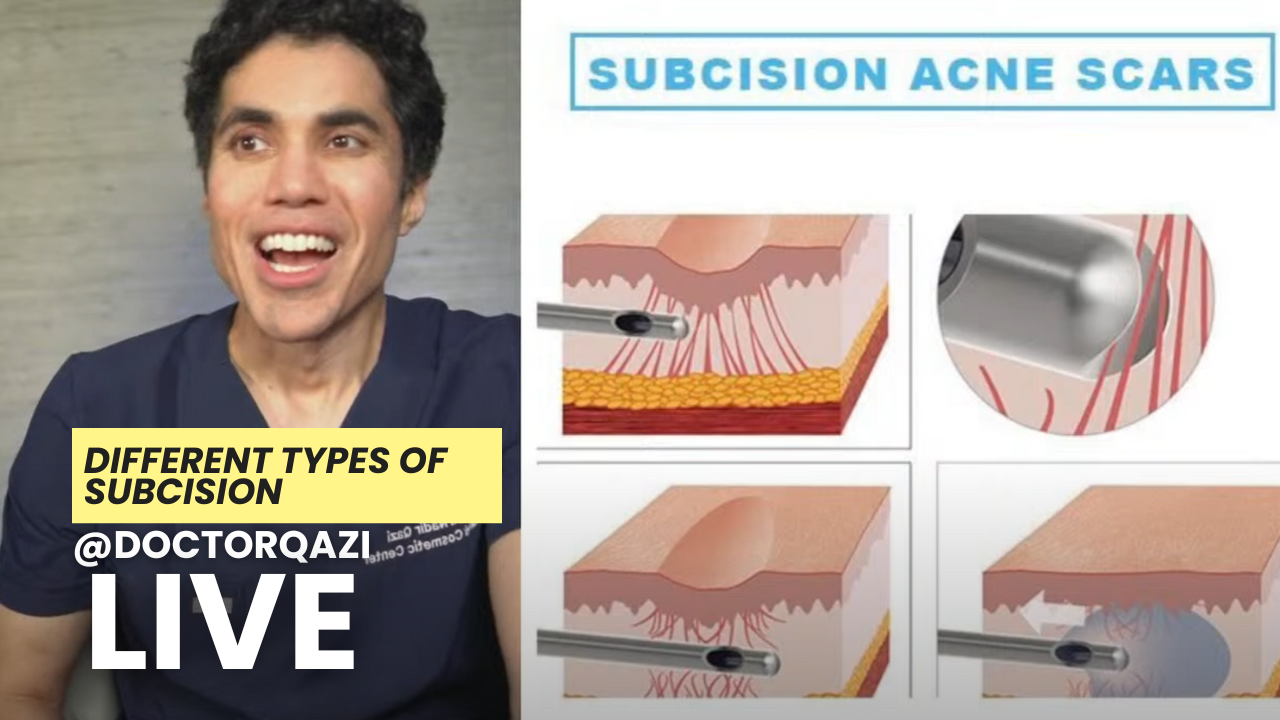
Subcision is a minimally invasive procedure designed to break up fibrous bands that tether the skin, causing depressed scars or wrinkles. These tethered areas can make the skin appear uneven, especially if you’ve dealt with acne scars, surgical scars, or even nasolabial folds caused by aging. By releasing these bands, we can stimulate collagen production and promote natural healing, which helps smooth out the skin.
I often get questions about why subcision works so well for scars. The answer lies in its ability to address the root cause of the problem—those fibrous bands pulling the skin downward. Once they’re broken, the skin can rise back to its normal position, and collagen remodeling takes over to further improve texture.
The Tools of the Trade: Blunt Cannulas, Nokor Needles, and Beyond
One of the most common questions I receive is about the tools I use during subcision. For most cases, I rely on a blunt cannula because it’s safe and effective at breaking up scar tissue without cutting vital structures like blood vessels or nerves. However, there are times when a blunt cannula isn’t enough. In those situations, I might switch to sharper tools like the Taylor Liberator or a Nokor needle.
- Blunt Cannulas: These are my go-to instruments for feeling out the layers of the skin and ensuring I’m working at the correct depth. They allow me to navigate safely between the dermis and hypodermis without accidentally puncturing deeper tissues.
- Taylor Liberator: When I encounter particularly stubborn fibrotic bands, this tool becomes invaluable. Unlike some other sharp devices, it doesn’t pick up bits of fat or tissue, making it safer and more precise.
- Nokor Needle: This blade-like instrument is perfect for targeting individual fibrotic bands directly beneath the scar. It allows me to break them up efficiently while minimizing trauma to surrounding areas.
Each tool has its place, and choosing the right one depends on the specific needs of the patient. Safety always comes first, which is why I spend time assessing each case thoroughly before deciding on the best approach. powerful tools in our arsenal. However, choosing the right modality depends on the specific characteristics of the scar and surrounding skin.
Navigating Skin Layers: Precision Is Key
Understanding the layers of the skin is crucial for performing subcision effectively. If you look at a cross-section diagram of the skin, you’ll see multiple layers: the epidermis, papillary dermis, reticular dermis, and finally, the hypodermis (where fat resides). Many practitioners mistakenly think subcision should be done close to the fatty layer, but that’s not always true—and it can lead to complications.
When you go too deep, you risk shifting fat or damaging underlying muscles and nerves. This is especially risky in areas like the forehead, where important neurovascular structures lie just beneath the surface. Instead, I aim to work within the reticular dermis or slightly above the hypodermis. This ensures I’m breaking up the tethered bands without causing unnecessary harm.
It’s also worth noting that as we age, our skin becomes thinner, and the layers compress. This means I must adjust my technique accordingly, using lighter pressure and being extra cautious to avoid over-treatment.
Combining Subcision with Other Treatments
While subcision alone can yield impressive results, combining it with complementary treatments often leads to even better outcomes. Here are some of the methods I frequently pair with subcision:
- TCA Cross: Ideal for ice pick scars, this chemical peel targets the deepest parts of the scar, promoting collagen stimulation and resurfacing.
- Fat Transfer: After subcision, adding volume through fat grafting can help support the newly released skin. This is particularly useful for patients who have experienced significant fat loss due to aging, weight changes, or medications like Ozempic.
- Phenol Peels: For thicker scars or Fitzpatrick skin types 1–4, phenol peels provide excellent resurfacing and tightening effects. They also stimulate collagen production, enhancing the overall result.
- CO2 Laser: While I prefer using ablative CO2 lasers around the edges of scars rather than across the entire depression, this technology remains a powerful ally in refining texture and reducing discoloration.
By tailoring these combinations to each patient’s unique needs, I can achieve transformative results that stand the test of time.
Addressing Common Concerns About Subcision
Let’s talk about some of the concerns patients often bring up regarding subcision:
Is Subcision Painful?
Not at all! Before starting the procedure, I apply a numbing solution to ensure comfort throughout. Most people describe the sensation as mild pressure rather than pain. Personally, I find the process quite cathartic—it’s rewarding to break up decades-old scar tissue and give patients a fresh start.
What About downtime?
Downtime varies depending on the extent of the treatment and whether additional therapies are involved. Generally, patients experience redness and swelling for a few days to a week. Full recovery typically takes two to four weeks, during which I advise avoiding strenuous activities and following a gentle skincare routine.
Can Subcision Cause Sagging?
Yes, improper technique can lead to sagging, which is why it’s critical to choose an experienced provider. I take great care to maintain the structural integrity of the skin while breaking up scar tissue. Over-aggressive treatment can shift fat or damage ligaments, resulting in unwanted laxity.
Who Should Avoid Certain Treatments?
Not every treatment suits every patient. For example, Sculptra—a popular injectable for volumization—shouldn’t be used in high-risk areas such as the forehead, around the eyes, or near the mouth. These regions are prone to movement and contraction, increasing the likelihood of nodules or uneven results.
Similarly, phenol peels require careful consideration, especially for younger patients. While they deliver dramatic improvements, they also carry risks like prolonged downtime and potential long-term effects. As a rule of thumb, I recommend waiting until patients are closer to their mid-20s before pursuing aggressive resurfacing procedures.
Trust Your Provider
Subcision is a highly specialized procedure that demands skill and experience. Unfortunately, not everyone offering it possesses the necessary qualifications. Watching videos of practitioners aggressively digging into fatty layers or ignoring warning signs fills me with concern. Always vet your provider carefully, ensuring they prioritize safety and have extensive training in advanced dermatological techniques.
Thank you for joining me today! If you found this guide helpful, feel free to share it with others who might benefit. And remember, achieving beautiful, healthy skin is a journey—one step at a time.
Contact My Team Today
If you’re considering treatment, I encourage you to research thoroughly, ask questions, and choose a practitioner who prioritizes your long-term skin health over quick fixes. Your skin deserves nothing less than the safest, most effective care available.
Visit doctorqazi.com to self-schedule a consultation. You can also call/text us at 949-336-7293 for more information.

Meet Dr. Nadir Qazi
While growing up in Chicago, I struggled for years with severe acne and scarring. Dealing with constant comments about my skin, especially from friends and family, wasn’t easy. That feeling of isolation and defeat hit me hard. Many around me were in the same position, yet there were very limited solutions available. This led me to determine my mission: to tirelessly build a unique medical practice where compassion meets science, providing proper care for every overlooked skin type and tone. At my Center, my team and I offer only clinically proven treatments that I have personally researched. My goal is to help others achieve their dreams, breaking free from the constraints of their physical appearance, and to be the support I needed the most.



